The single most useful thing about ant control is species identification, because the correct treatment for one ant is the wrong treatment for another. Odorous house ants — the ones that give off a stale coconut smell…
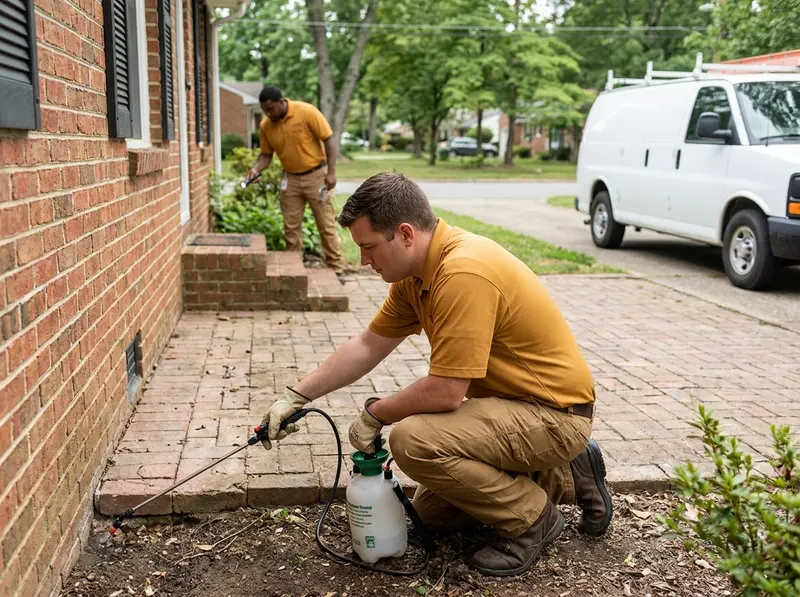
The single most useful thing about ant control is species identification, because the correct treatment for one ant is the wrong treatment for another. Odorous house ants — the ones that give off a stale coconut smell when crushed — are the most common kitchen complaint we hear from Mechanicsville homeowners. Spraying them with a contact product off the shelf actually makes the problem worse: the colony buds, splits into satellite nests, and two weeks later there are trails in the bathroom as well as the kitchen.
Carpenter ants are a different job entirely. These are the big black ants that show up in older homes around Studley, Cold Harbor and Rural Plains where mature oaks and pines shade the roof and keep fascia boards damp. They do not eat wood; they excavate it, and they follow moisture.
When we find them, the search moves to the actual nest gallery — a wet window sill, a porch column sitting on damp concrete, a deck rail, a roof edge under a limb that touches shingles. Fixing the leak matters as much as the treatment.
Where your house sits changes the ant pressure.
Newer slab-on-grade construction around Rutland, Bell Creek and Atlee Station tends to produce pavement ants and little black ants coming up through expansion joints in the garage and along the front walk. Crawl-space homes near Pole Green, Hanover Green, Shady Grove and Cool Spring push the problem toward acrobat ants and moisture-driven nesting in the substructure, which is why we look under the house rather than only along the baseboards. Deep hardwood mulch banked against siding is the other common culprit throughout Laurel Meadow and the wooded lots off Cold Harbor Road — mulch holds water against the foundation and gives a colony a warm, damp corridor straight to the sill plate.
On the decision itself: a one-time targeted treatment is the right call when you have one clear trail, one entry point, and no history of the problem returning — kitchen ants after a spring rain, for example. A recurring exterior perimeter service makes more sense for homes that reflood every year, homes bordering woods or a creek line, and homes where the crawl space stays damp. The trade-off is honest: a single visit costs less and often solves a single-colony problem, but it does nothing about the four other colonies in the yard that will find the same crack next April.
We will tell you which situation you have during the visit, and no annual contract is required to get treated.
Every job gets a firm, written price after a free on-site visit.
Tell us about your ant control job in Mechanicsville and we'll send a clear, written quote — usually the same day.
 Rovixa Pest Solutions